
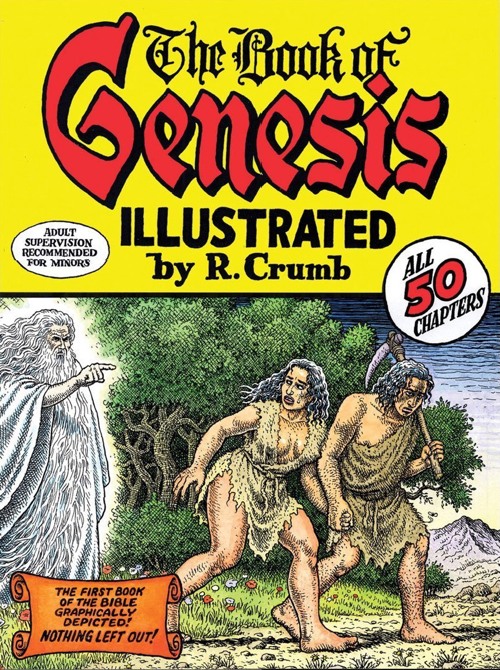





Holy shit. This is quite possibly the most insane chapter in this entire book, and trust me, having read it in detail, that is saying a lot. Your Sunday school probably used this chapter to teach you all about the sins of masturbation, birth control and abortion, but he or she probably didn't tell you the whole story, unless he or she is one sick puppy.
This particular chapter is an interlude about Judah, Israel's fourth son, and a direct ancestor of Jesus. Judah takes a walk one day, and sees a pretty Canaanite girl called Shuah. It's possible he marries her, or he just has sex with her. The result is a son, Er. Then they have sex again, and the result is Onan. If you're familiar with the term Onanism, you know where this is going. Finally, she has a third son who is called Shelah.
Judah finds a wife for Er called Tamar, but before she can get pregnant, Er does something wrong and god kills him. For those of you keeping track at home, this would be his second killing of an individual, Lot's wife being the first. Bonus round: what crimes do not warrant a heavenly death penalty? Which one did? Read through to the end to find out.
Judah said unto Onan 'Go in unto thy brother's wife, and marry her, and raise up seed to thy brother (v. 8). Now, before his death, Jerry promised to dedicate the rest of his life to preventing homosexual marriage, because it's against the bible. But here we have a quite clear proscription as well: if a married man dies without issue, his brother must marry his wife. For the bible's other teachings on marriage, see here.
Onan isn't too thrilled at the idea of his brother's sloppy seconds, and it came to pass, when he went in unto his brother's wife, that he spilled it on the ground, lest that he should give seed to his brother (v. 9). Now, this verse is the one that supposedly condemns masturbation, birth control and abortion all in one go. Jerry is oddly silent. But just reading it, it seems pretty clear that Onan wasn't masturbating, he just pulled out early because if Tamar got pregnant, Er would get credit for the baby. So as an argument against birth control, fair enough, but self-pleasure is still in-bounds as far as I can see.
Anyway, god, turning into a right serial killer in this chapter, kills him.
Judah tells Tamar to go home and wait for his final son, Shelah, to come of age, and she goes.
One day, Judah goes out to shear his sheep. Tamar hears that he's going out and puts on a veil and sits outside, apparently because Shelah is now grown and hasn't married her. Maybe he thinks she's bad luck? I wouldn't blame him.
Judah sees her and thinks she's a prostitute, so he asks her to have sex with him. She asks him what she'll get in return. I think this would be the part where she actually becomes a hooker. Anyway, he promises her a kid from his flock, and she asks for a deposit, his signet ring, a bracelet and a staff. They have sex and she gets pregnant. Then she goes home and puts her widow's clothing back on.
Judah, meanwhile, tries to send the goat down, but can no longer find her. So, prostitution is the world's oldest profession, and ripping clients off is the second oldest. His messanger asks where the harlot went, and they tell him that particular corner has never been frequented by ladies of the night. Judah insists they find her lest we be shamed (v.23) as if the shameful thing here is failing deliver a goat you promised to a prostitute you had sex with.
A few months later, Judah finds out that his daughter in law has been turning tricks and is pregnant. He orders her brought to him and burned. Fortunately, Jerry does not use this passage to call for the immolation of whores.
Tamar is a smart girl, however, and shows up with his stuff, saying he's the father. Judah acknowledges that the ring, bracelet and staff are indeed his, and that he is the one in the wrong, because he never gave her to Shelah. Then he stops having sex with her. Aw, what a guy!
The result is twins, and in the most monstrous description of birth yet, one twin puts his hand out and the midwife puts a scarlet thread around his wrist to show which one came out first. But he pulls his hand back in and the other one comes out. The twins are called Pharez and Zarah.
So, in one chapter that's two murders by a displeased deity, a daughter in law who prostitutes herself to her father in law, a father who visits hookers and a father in law who threatens to throw his hooker daughter in law on the auto-de-fé. What do you think: is this the most fucked-up chapter, or does the title belong to chapter 34 (Dinah is raped and her brothers convince the Hivites to get circumcised, then kill them) or even possibly chapter 19 (crowd of drunken men wants to rape a couple of sexy angels, Lot, to placate them, offers up his daughters, god destroys city, Lot's wife turned into salt, his daughters get him drunk and have sex with him). Actually, it seems a close race between chapters 19 and 38.
Finally, the crimes which do not merit a divine death sentence: eating of the tree of knowledge of good and evil (Adam and Eve) fratricide (Cain), murder (Lamech), nude drunkenness (Noah), lying, casting your son into the desert (Abraham), beating your servants (Sarah), offering your daughters to a drunk, randy crowd, lying about their virginity (Lot), getting your father drunk and raping him (Lot's daughters), public sex (Isaac), polygamy (Esau, Jacob), pretending to be your brother, stealing your brother's birthright (Jacob), lying to your daughter's bridegroom about which daughter he actually had sex with, then fooling him into working for you for free for 7 years (Laban), icon stealing (Rachel), rape (Shechem), mass murder (Simeon and Levi), having sex with your stepmother (Reuben), cross-dressing (Joseph), selling your brother into slavery (Israel's other sons, except Reuben).
And those that do: having evil thoughts (the flood victims), 'grievous sin' (the people of Lot whom, if you will remember, god planned to kill even before the near angel rape), looking back at Sodom (Lot's wife), wickedness (Er), failure to complete the sexual act (Onan).
Thursday, January 21, 2010

Wednesday, January 20, 2010
Genesis Chapter 37
Ah, here we are at the story of Joseph, which many of you will be familiar with because your high school put on at least one performance of Joseph and the Amazing Technicolour Dreamcoat while you were there.
Joseph is 17 when this particular incident happens, and he sounds like a pain in the ass Joseph brought unto his father their evil report (v.2). In other words, he tells on them. We all love tattletales, right? For this, and the fact he's Rachel's son, Israel loves him best and he made him a coat of many colours (v.3) which even Jerry admits is 'a garment worn by the daughters of kings' or 'a ceremonial robe draped about statues of goddesses.' In other words, either his father is dressing his 17 year old son in girl's clothes, or Josesph is a big old biblical queen.
Now this favouritism shown by Israel does not go unremarked by Joseph's 11 brothers. They're not even civil to him. But it doesn't stop Joseph from wanting to tell them about his dream. I think we can all agree that the only thing more irritating than a snitch is someone who wants to tell you about his dreams. And what was said dream: well, they were all binding the wheat when suddenly, the sheaves become animated, and the brothers' sheaves all gathered around Joseph's sheaf and made obeisance to it. I amend what I said before: a snitch is annoying. A snitch who wants to tell you about his dreams is really annoying. A snitch who wants to tell you about his self-serving dreams deserves what he gets, even if he is only 17.
Anyway, this dream does not endear Joseph to his brothers and makes them hate him even more. But Joseph still isn't done. He then tells him another dream, where the sun, moon and 11 stars all pay obeisance to him. He describes it to his father, who has finally had enough and rebukes him.
One day, the brothers go out to tend the flock and surprisingly, do not invite Joseph, but Israel sends him anyway. While he's on his way, he meets a man who tells him his brothers went somewhere else. So he heads over. His brothers see him and while he's still out of earshot they conspire to kill him and throw him into a pit and tell their father an animal got him. Okay, he might not deserve that, but a circle booting wouldn't hurt. Fortunately, Reuben, who was last seen having sex with his stepmother, convinces them not to kill him. Instead, they take off his drag and throw him into a pit. They sit down at the top for lunch and see a caravan of Ismaelites passing by on their way to Egypt. Judah, the fourth son, suggests selling him to them. So they sell him for 20 pieces of silver.
Reuben must have left at some point, because he comes back and finds the pit empty and tears at his clothes in remorse. They kill a goat and dip the coat in its blood, then present it to their father who blames a wild animal. Israel dresses in sackcloth and goes into mourning. Joseph, meanwhile, is sold to an official in the Pharoah's house in Egypt.
Tuesday, January 19, 2010
Genesis Chapters 35 & 36
Chapter 35
God tells Jacob to go to Bethel and build an altar. Jacob tells his household to put away their strange gods (v.2), which of course would be the pagan idols they still worship, take showers, and put on clean clothes, because he has decided the god who answered his prayers when he was in distress is the one true god. Is that clear to everyone? Jacob basically opened the heavenly phone book and called all the gods in it, then chose the one who rang back first. So they give him all their false idols and earrings, and he buries them under an oak tree and they leave. On the way, the terror of god was upon the cities that were round about them, and they did not pursue after the sons of Jacob. What this terror might involve is not explained, but we do know that he has promised not to murder us all by mass flood, but not to refrain from using fire and brimstone (ch. 19) or sealing the wombs of all the women (ch. 26) or he may have a new form of terrorism. It's not clear.
Jacob builds an altar in Luz and changers the name to Elbethel. Rebekah's nurse dies. God comes along again and gives Jacob a blessing. Then he changes his name to Israel, though everybody still calls him Jacob. Israel builds a pillar in that spot.
Rachel is pregnant and goes into labour on the road, which is never fun. She has a boy, of course, and names him Benmoni, meaning 'son of my pain', but Israel changes it to Benjamin, meaning 'son of my right hand' (v. 18). Israel sets up a pillar on her grave, then keeps going to Edar.
Once there, his son Reuben has sex with his concubine Bilhah, who is what his stepmother? Israel knows but nothing is said.
Israel finally arrives in Mamre. Isaac is still there, aged 180, and he dies. Israel and Esau bury him.
Chapter 36
Another genealogy. Yawn. There are some inconsistencies, indicating that perhaps even the copyists who wrote this out time after time didn't like doing it very much, either.
Monday, January 18, 2010
Genesis Chapter 34
This is not one of the chapters your Sunday school teacher told you about, unless he or she was a twisted sadist.
Jacob's only daughter Dinah goes out to see the daughters of the land (v.1). Apparently she was between the ages of 12 and 14, and was possibly going to the tent where menstruating or recently post-partum women hung out until they were 'clean' again, which makes what follows an even greater sin in the eyes of the ancient Israelites. On the other hand, it's possible she was going out carousing with the heathen Canaanite girls, and this is a cautionary tale to good Christian girls today about the dangers of getting too close to the enemy.
Shechem, a Hivite prince, sees her and rapes her, but in what strikes me as a case of biblical fudging not all that different from Luke and Laura on The Guiding Light, he falls in love with her. He asks his father to arrange a marriage with her. The father, anxious pretend to form an alliance with Jacob, but really to gain control of his land and livestock, goes to find him.
Jacob, meanwhile, hears about the incident and tells his sons about it. They're angry, but not for their sister, for their own pride, so they're in no mood to make deals when Hamor the king shows up to ask for Dinah, and with their other daughters, in a trade alliance. Shechem asks for their forgiveness and says he'll pay any price.
Jacob's boys decide to lie and tell the Hivites they can't agree unless they get circumcised, but if they do, no problem. Hamor and Shechem are happy with the deal and they go to tell their people about the deal and find a mohel (circumcisor). So they all get circumcised and while they're still recovering Simeon and Levi come along and kill them all and take Dinah home with them. The others get in on the act and take all the livestock, the money, the wives and the kids.
Jacob tells them this won't be good, as their numbers are smaller than those of the Canaanites and Perizzites, who will now attack, but Simeon and Levi ask if they should have just let them treat their sister that way. What we never do find out is how Dinah feels about all of this, because we will find out in Deuteronomy that non-virgins cannot marry, even in cases of rape, so basically she's going to end up an unmarried girl in her father's house, then when he dies, she'll get passed on to one of her brothers and probably treated like a servant.
Sunday, January 17, 2010
Genesis Chapters 28-33
Chapter 28
Isaac commands Jacob not to take a wife from among the heathen Canaanites, but rather to go back to Padan-aram, where Rebekah is from and marry one of his uncle Laban's daughters. He also blesses him, and passes along the blessing god gave to Abraham.
Esau observes all of this and goes to his uncle Ishmael and adds one of his daughters to his harem. Lots of cousin-marrying in this book. It's almost like they're hillbillies or something.
Back to Jacob, who camps in the desert, using stones for pillows, which sounds like fun, and dreams of a ladder to heaven, with angels going up and down. Rock pillows will do that to you. God is at the top, and he repeats the promise he made to Abraham and Isaac: you'll inherit this land, you'll have lots of offspring, yada yada yada. He promises to stick around until it happens. This apparently is where the expression 'Jacob's ladder' comes from.
Jacob wakes up and thinks this must be the gate of heaven, and he's afraid. So he stacks up the rocks and pours oil over them, which apparently is a pagan ritual. He names the place Beth-el and vows that if god fulfills his promise, he'll keep this stone as a place of worship and give one-tenth of his wealth to him. So begins tithing.
Chapter 29
Jacob comes to Haran and sees a well with a stone on it. He asks the shepherds where he is and they confirm it. He asks if they know Laban, and they do, and he asks how he is, and they say fine, and that his daughter Rachel is coming with some sheep. He tells them to water the sheep, like who does he think he is, walking up to a bunch of strangers and imposing his farming methods on them? and they say to wait until all the sheep have arrived. As they're talking, Rachel arrives. Jacob, clearly showing off for the girls, rolls the stone away and waters the flock. Then, apropos of nothing, he kisses her and bursts into tears. Oddly, she does not reject him right then and there.
He introduces himself, which I would have thought should be the first thing to do, and she runs back to tell her father. Laban comes out and hugs him and bring shim back, where he stays for a month.
Laban asks Jacob to work for him, and asks how much he wants to be paid. We then get a horse-trader's assessment of his two daughters: Leah is cute, but Rachel is hot, so Jacob offers to stay for seven years if he can have Rachel at the end. Laban agrees Jacob is a good match, so Jacob stays on and they seemed to him but a few days, for the love he had to her (v.20), which I think is the most romantic thing the bible has said to date.
Of course, Jacob goes and ruins it all in the next verse with his quite obnoxious demand, give me my wife, for my days are fulfilled (v.21), and rather than telling him to say the magic word, Laban throws a feast and brings him... Leah! But Jacob doesn't notice what with the feasting and the wine and the dark and the horniness after 7 years, until morning. He asks his uncle what the hell happened, and Laban explains that in their country, the youngest daughter can't be married before the first. He tells him he can enjoy the next week for a honeymoon, but he'll have to stay another seven years if he wants Rachel as well. How hot is she going to be after 14 years of this? But Jacob does it and he marries Rachel as well, finally, and loves her more than Leah, which so isn't going to turn out well, which he should know after his own experience where his mother liked him better and his father liked his brother.
Jerry finally notices that someone in the messianic line is a polygamist, but it's okay! It isn't outlawed until later!
Anyway, god, loving the irony of this second Jerry Springer episode, makes Leah pregnant and Rachel barren, because he's the only one who's allowed to have favourites. The resulting son is Reuben, and Leah thinks he'll bring her and Jacob closer together. Oh, sweetie, if I had a nickel for every woman who has tried that and failed, I'd live in a much nicer apartment. She has another son, Simeon, so obviously Jacob doesn't hate her too much, then another and another, finally goes into menopause.
Chapter 30
Rachel proves herself to be Jerry's kind of woman, one whose entire identity is wrapped up in her children, or lack thereof. She gets jealous of Leah and tells Jacob to give her kids or she'll die. Jacob gets pissy and says it isn't him, it's god. Well, that and his reserves are probably depleted by impregnating Leah so much. She has the brilliant idea of giving her handmaid Bilhah to Jacob, because that worked out so well with Sarah and Hagar and Ishmael, but Jacob will screw anything, rather like Abraham.
So Bilhah conceives a son, which Rachel claims as her own, whilst admitting it is a blessing and a curse at the same time so she calls him Dan. Bilhah has another son by Jacob, who Rachel also claims him and calls it a triumph over her sister, and calls him Naphtali.
Leah is in menopause, but isn't willing to give up the baby tower-building, so she gives him her handmaid, Zilpah, and they have a son together, then another one. Unlike Hagar, we never hear how these slaves feel about being part of an arms race, but I'm thinking Margaret Atwood captured it pretty succinctly in The Handmaid's Tale. Leah declares herself the winner.
Leah's first son Reuben is a farmer, and one day he finds mandrakes in his fields. Jerry informs me that mandrakes were thought to be an aphrodisiac and an aid in conception, so that's why this incident is important. Rachel asks Leah for some of he mandrakes and Leah retorts that she has their husband's heart, why does she need mandrakes, too? Rachel says Leah can have Jacob that night if only she can have the mandrakes. I'm waiting for this to be a plotline on Big Love.
Jacob comes home from the fields and Leah comes out and tells him he has to come with her, because Rachel traded her night for mandrakes. Jacob isn't particular, so he comes home with her. The result is the fifth son, because apparently sons with handmaidens don't count in the line of descent, only for sheer numbers in arms races, and calls him Issachar. Then she has a sixth son. She praises the lord and fools herself into thinking this is going to convince Jacob to stay with her forever. Her final child is Dinah, a girl.
God remembers Rachel and finally she has Joseph, but vows that she'll have another.
Jacob finally decides he's tired of living in Padan-aram so he asks Laban to let him go home. Laban asks him to stay, because god has shown him favour as a result of Jacob's presence. He asks him to name his price. Jacob says he's done his bit, his uncle is now rich in cattle, and now he wants to strike out on his own. Laban asks what Jacob wants. He promises to feed and keep the next day, and while he's doing that, he'll take all the speckled and spotted animals from Laban's flocks. Laban agrees, then takes all the same animals out of his flocks that same day, proving that it doesn't take much to be smarter than Esau.
Jacob doesn't say anything, but apparently acting on superstition, he makes white streaks in some popular, hazel and chestnut sticks, and piles them in the water troughs, so that when the animals come to drink, they'll see the branches and bear streaked and spotted offspring. I am not making this up. It is right there in verses 37-41 of Genesis, and it works. Try it for yourselves.
Jacob takes his new flock and keeps up the branch trick with the strongest animals, until he has all the strong animals and Laban the weak. Finally, he's rich in cattle, slaves, camels and asses.
Chapter 31
Laban's sons notice that Jacob now has all the good animals, and Jacob himself notices that Laban won't look him in the eye anymore. God tells him to go back, and he'll stay with him. Just like he stayed with him for all that time Rachel was trying to get pregnant. Jacob tells his two wives what's up with their father, and what god said, and reminds them how loyal he's been to Laban, and how poorly he's been treated in return. He confesses that's why they now have all the good cows, and that god has also told him to go home.
Rachel and Leah mostly want to know if their entire inheritance is now gone, because obviously they know they can't trust Jacob as long as there are slave girls around, but they do agree to go.
So they mount their camels and Jacob gathers the cattle and the goods, and while Laban is shearing the sheep, Rachel steals the pictures from the house, though not the kitchen sink, and they ride off, but not for long.
Laban finds out on the third day that Jacob and company have left, and a seven-day camel chase occurs with all his kinsmen Somewhere on the way, God appears to Laban in a dream and tells him to be neither mean nor kind to Jacob. They finally catch up to them near mount Gilead. Jacob has stupidly made camp for the night, and Laban comes in and asks him my he left in the middle of the night and kidnapped his daughters at swordpoint? He seems most insulted that Jacob didn't let him throw a good-bye feast and say goodbye to his kids and grandkids. Apparently this lack of courtesy means he can now harm him, but god has told him not to be angry or nice here. So now he's here to say that he understands Jacob wants to go home but there's the small matter of stolen property.
Jacob says he was afraid that Laban would take his wives away. Hey, at least he didn't pull the sister racket! He tells Laban to go through his luggage and take anything that belongs to him not knowing Rachel stole the icons. So Laban goes through Leah's tent, then the servants, and finds nothing, but finally he goes into Rachel's tent. Rachel has cleverly hidden the icons in the camel saddles and sat on them, so Laban doesn't find them. She tells her father that she can't stand up because she has her period, knowing he won't go near her.
Jacob and Laban argue and Jacob asks what he's done wrong, what Laban has found after ransacking his tents. He taunts him to say it in front of all their kin, so they can be the judges. He points out his twenty years of service, that the sheep haven't miscarried and he hasn't eaten the rams that he hasn't charged him for the losses, that Laban has stolen his time, and Laban has cheated him over and over again, and god saw it all but only rebuked him the other night.
Laban says Leah and Rachel are his and by extension so are their children, as well as the cows, so what can he do to all that is his?
He proposes a pact. Jacob takes a stone and starts a pillar, and tells his kin to do the same, and they all eat on the resulting pile. Laban wants to call the pile Jegarsahadutha, but Jacob prefers Galled and can you imagine how fun family dinner must be in this house, with the arguing over what to call a pile of rocks, and whose property the women are, and who bred the cattle how? Gawd.
Laban calls on god to watch over things when they aren't together, and says he doesn't want Jacob taking any further wives, as if four isn't enough, and says that in exchange he won't cross the border formed by the rock pile, nor will Jacob. Jacob agrees and sacrifices an animal and then they feast and Laban goes home.
Chapter 32
Jacob sets off and meets some angels. He asks them to go to Esau and tell them what he's been up to and that he's on his way. They do, and come back to say Esau is on his way to meet them with 400 men. Jacob is afraid and divides his people into two, on the theory that Esau can only fight one contingent. He asks god for safe passage. He camps for the night and chooses some goats, sheep, camels, donkeys and cattle and gives them to his servants with instructions to meet Esau and tell him this is a tribute. He sends out two more servants in different directions with the same orders. He figures this should appease Esau. Then he sends his wives and sons along, too. Then Jacob is alone except for a man, whom he wrestles all night.
Finally, Jacob wins despite his dislocated 'thigh', which might be his hip, or his penis, which I will find out when my uncensored bible arrives. The man asks for mercy, but Jacob says not until he blesses him. The man asks who he is, and he says Jacob, and the stranger says he's no longer Jacob, but Israel, because he has power over god and man. Jacob asks who he is, and why he wants to know who he is, but it's a secret, so the man shuts him up with a blessing.
Jacob calls the wrestling ring Peniel, because he saw there. Finally, the pain in his thigh catches up to him, and apparently that's why Jews don't eat the sinew of the thigh, which I did not know.
Chapter 33
The copy editor must have been on holiday that week because suddenly Leah, Rachel, Zilpah and Bilhah are there, and Esau is within sight. Jacob lines them up in order of importance: handmaids, Leah, Rachel, himself, then goes to the front and bows down before his brother.
Esau hasn't gotten any smarter in the past 20 years, so he runs up to his brother and kisses him. He sees the harem and asks who they are, and Jacob says they're the children god has given his (Esau's) servant. The handmaidens bow, then Leah, then Rachel. Esau asks about all the other people he met, and Jacob says they're presents. He urges them on Esau, who refuses, because he's got enough, thanks to god. Jacob says he's found Grace in Esau's sight, and begs him to take the loot, and flatters his brother that he looks like God, which he ought to know, since he just saw him. Finally, Esau agrees and Jacob asks to go home, and Esau offers to go first. There is some discussion about driving the stock too hard and Esaw asks to leave some of his slaves with Jacob who says god will help him. Esau goes back to Seir, and Jacob to Succoth then to Shalem where he pitches his tent and buys a field and builds an altar.
Genesis Chapters 26 & 27
Chapter 26
There is a famine in Canaan, so Isaac goes to Gerar, the capital of the land of the Philistines. God tells him not to go to Egypt like his father. He renews his promise that Isaac's descendants will inherit the land.
Eventually, the men of the place notice that Isaac has an attractive wife. Demonstrating that the apple doesn't fall far from the tree, Isaac says Rebekah is his sister. The ruse is discovered when the king looks down one day and sees them 'sporting' (v. 8). Now, at Jerry's school, Liberty University, students aren't even allowed to sunbathe lest they tempt each other into sin, but of course Jerry is willing to overlook public nookie if you're in the messianic line. The king confronts Isaac and asks him why he said she was his sister when she's clearly his wife. Well, if you were fooled by it the first time... Isaac explains he feared for his life. The king counters that someone could have had sex with Rebekah and got them all in trouble. He tells everyone to leave them alone.
Isaac plants crops and gets a hundredfold return on his investment, thanks to god. He becomes powerful, with servants and flocks and herds, and the Philistines are envious. They block his wells and the king asks him to leave.
So he leaves and pitches his tent in a valley and unblocks the wells. This causes tension with the local herdsmen, who tell him it's their water. He calls the first well Esek, or tension, and the second one Sitnah or enmity. Finally he digs a third well and calls it Rehoboth, which means plenty of room and the fighting ends. Nevertheless Isaac goes on to Beer-sheba. God finds him that same night and renews his promise. He builds and alter and digs yet another well.
The king comes and finds him and proposes they make a pact of mutual non-aggression. They seal the deal with a meal and the king leaves in the morning. The slaves come back and tell him they've found water. Lots of concern about water in this chapter.
The last two verses are about Esau, Isaac's son. We find out he married two women, Judith and Mashemath, and Jerry doesn't hesitate to call them heathens and evidence of Esau's spiritual depravity, after ignoring all of Abraham's transgressions with the servants. Isaac and Rebekah do not approve of their daughters-in-law. Sigh. In-law troubles.
Chapter 27
Isaac is now old and going blind, and he calls his son Esau to him. He asks him to kill a deer and make a stew for him. Remember that in Chapter 25, Esau was Isaac's favourite, despite his selling his birthright and polygamous marriage to heathens. He promises him a blessing in return.
Rebekah overhears the request and after he leaves, she goes to Jacob and tells him to kill two of his goats and she'll make a stew so Jacob can bring it and get the blessing while pretending to be Esau. Jacob points out his brother is hirsute and he is smooth, so Isaac will surely know something's up and he'll be cursed. Rebekah tells him the curse will be on her. So he goes and kills the kids and brings them back. His mother takes one of Esau's garments and tells Jacob to put them on, then she covers his hands and neck with the goat skins. This is a lot to do for a simple blessing.
Jacob takes the stew in and his father asks him who he is. He says Esau and he brought the stew. Isaac asks how he did it so quickly, and Jacob says god helped him. Isaac isn't convinced and asks to feel him to make sure he's really Esau. Isaac says he sounds like Jacob but is clearly Esau. He asks if it really is Esau, and Jacob lies bald-facedly that he is indeed. Finally he agrees to eat the stew and give the blessing.
When Isaac finishes, he tells his son to come closer so he can kiss him. He smells the clothes and Isaac gives his blessing that he'll inherit the country and its people.
Esau comes in just after the scene with his venison, and aks for his blessing. Isaac asks who he is, and he explains. Isaac says he already ate, so who was the person before? Because he already gave his blessing. Esau begs him to bless him as well, but Isaac figures out it was Jacob and the blessing is gone.
Esau bitches a bit about his brother's cunningness, but Isaac says he's now in charge and he's already given him the slaves, vineyards and fields. He asks what Esau wants.
Esau points out that surely his father has more than one blessing to give? Isaac promises him the fatness of the earth (v. 40), and that he'll live by the sword as a servant of his brother, but eventually he'll break free and be in charge.
Esau hates his brother, and really, who can blame him? He vows vengeance as soon as he's out of mourning for his father. Rebekah hears about it, because there is no privacy in a tent, and calls Jacob to her. She tells him to go to her brother Laban until everything blows over. She complains to Isaac that Esau's wives are tiresome and she doesn't want Jacob marrying any heathens.
Whew. Brothers have pretty tense relationships in this book. Cain kills Abel, Ham becomes his brothers' servant, Ishmael is banished so Isaac won't have to share his inheritance and now Esau only gets a lame pity blessing after his brother steals the real one. So is Jacob the first biblical con artist, or does he just seize the day? Is Esau's problem that he's just kinda dumb, selling his birthright for a bowl of soup? Is Rebekah Machiavellian?
Genesis Chapters 12-25
We are introduced to Abram and his wife Sarai (which has presumably evolved into Sarah), who was barren, at the end of Chapter 11. At that point, they were on their way to Canaan, presumably to finish the job the Japhetic Romans started and conquer the Canaanites for once and for all.
Chapter 12
God promises Abram that if he moves to Canaan, he'll make of thee a great nation, and I will bless the, and make thy name great (v.2). Isn't that exactly why he scattered the people of Babel? Jerry does accept that this is ironic, but justifies it by saying that now it's god's decision, not some selfish humans, so it's okay. What he does not find ironic is the labelling of the Canaanites as wicked sinners. By the winners. Who generally write history. I'll shut up about that now.
Abram goes, of course, with his wife Sarai and his nephew Lot, and when they finally arrive, god promises him the land, and he builds an altar. Then he... promptly moves to a mountain near Bethel, where he builds another altar. Unfortunately, there's a famine there, so he heads further south to Egypt to ride it out.
Once he gets to Egypt, he turns to his 65 year old wife and says that since she's such a hottie, they Egyptians might kill him if he says she's his wife, so she'd better say she's his sister. Since she his half-sister, that isn't really a lie, it just isn't the full truth. Apparently, Jehovah's Witnesses use this verse to justify something called 'Theocratic War Strategy', whereby they lie when they think they're protecting the truth from god's enemies, even while under oath in court. Don't trust a Joho, especially if he thinks you're his enemy, I guess.
Getting back to the story: the Egyptians, who are clearly hard up, do indeed find Sarai pretty tasty, and she is added to his harem. Pharaoh, who never gets a name, does compensate Abram with sheep, oxen, asses and servants, and Sarai gets asses and camels. But he leaves out god, who punishes him with the plague. For believing Abram. Who lied. What was he supposed to do, go to the civil records office in Ur and ask if there were any marriage certificates issued to Sarai? It's not like there were fax machines then. Pharaoh does the honourable thing and gives Sarai back, and they leave.
Chapter 13
Lot, Abram and Sarai go back to Canaan, but conflict quickly develops because now they're too rich, and there isn't enough room for everybody's herds. Abram is generous and offers Lot his pick of the grazing lands. Lot choses the plain of Jordan, which also happens to contain Sodom and Gomorrah, so we know this isn't going to end well for Lot.
Abram continues along as a farmer and Lot moves to the city, where the men are wicked. Isn't that pretty much the view of every country dweller, even today? I remember I was sitting in front of a woman from London on a train to Toronto once, and she was fretting about having her purse stolen while she shopped. Because daytime purse snatchings are so common in the Big Smoke. Surprisingly, Jerry is demure in is characterization of Sodom, saying it is only known for moral wickedness.
God reaffirms his promise of Canaan to Abram, a promise he has clearly not fulfilled, given the conflicts in that region, from the Crusades to the current Israeli-Palestinian conflict. Abram moves once again to the plain of Mamre, and builds yet another altar.
Chapter 14
Rebellion! Five cities revolt after 12 years of servitude. Eventually, the kings of Sodom and Gomorrah are eventually deposed and their allies flee to the mountains. Yet another reason to call them sinful, no?
So the other army marches into Sodom and Gomorrah and takes all the food, as conquering armies are wont to do, and also take Lot.
One member of Lot's household does manage to escape to Mamre and get word to Abram, who gathers his trained servants (v.14), which I guess means private army, and goes after the raiders. He catches up to them in Hobah and gets the captives back, as well as the goods.
The king of Sodom creeps down to meet him, and another king provides a feast. Jerry thinks that because he's the priest of the most high God he's a fellow Christian but I think that adjectival phrase there indicates polytheism yet again. Anyway, they all bless each other and god and Abram gives them tithes. The king of Sodom tries to do a deal with Abram: give him the people, and Abram can have the loot. Abram refuses, because he's a good Christian, and because he doesn't want to owe them anything.
Chapter 15
After the events of the preceding chapter, God comes to Abram and promises him a reward. According to Jerry, his reward is that he'll have children and they'll be the rulers of Canaan. Abram believes him but asks how he'll know that he'll inherit it. God then tells him to sacrifice a heifer, a goat, a ram, a turtledove and a pigeon and to sacrifice them. He kills the animals, but drives the birds away when they try to come down for their share. What a weird way to find out you're going to inherit land.
Abram goes to sleep after the hard work of killing things, and receives a prophecy that his heirs will be exiled in Egypt for 400 years, but he'll judge the Egyptians and they'll come back rich after four generations. He then lists the Abrahamic peoples that will live in Canaan after the exile.
Chapter 16
Ten years have passed since the end of the last chapter. The now 75 year old Sarai is still childless. So she has the brilliant idea that Abram should have a child with her maid Hagar. Does this ever end well?
So Abram does, and Hagar gets pregnant, because all cases of infertility in the bible are on the female side, natch, and the result is Ishmael. Oh, and Hagar now hates Sarai. Well, who wouldn't, really? Sarai gets jealous of course, but Abram reminds her that Hagar is a slave and she can do what she wants to her. Sarai dealt hardly with her (v.6) and she flees.
An angel finds her sitting by a fountain in the wilderness and asks her what's up. She explains that she's left. He tells her to go back and submit and he'll give her children without number. He explains the first one will be Ishmael, and he'll be feisty and won't get along with anyone. Oh, and he'll be the forebear of the Arabs, which is pretty fucking convenient for old Jerry, who says Abram's 'act of the flesh' is the beginning of the Israeli-Arab conflict. No, I'd say it's more to do with letting them plunk down there at the end of WWII without thinking about the current inhabitants, not a biblical sex act. But this lets any modern foreign policy off the hook so Jerry goes with it.
So Hagar goes back and has Ishmael when Abram is 86 years old.
Chapter 17
Abram is now 99 years old and god comes along and asks him to go for a walk. He promises him yet again that he'll provide children for him, which causes Abram to fall on his face. Who knew the bible had slapstick bits?
God then changes his name to Abraham, because of all the nations he's going to father. He promises that this covenant will extend to his descendants, which as far as Jerry is concerned, means the Jews are still entitled to it. Well, that should settle it!
He then tells Abraham that his end of the bargain will be to circumcise himself and all the boys in the tribe, even the slaves, will also be circumcised when they're 8 days old. Seems like a good deal to me, if only god would hurry up and hold up his end of the bargain. Finally, he says that any boy that isn't circumcised will be exiled, not that they'll have much choice at 8 days old.
Moving right along, Sarai will now be called Sarah, because she, too, will be blessed with a son who will found many nations. At age 89. Jerry chalks it up to supernatualism, which he pretty much does any time something impossible happens. Abraham falls over again, this time laughing at the idea of a 90 year old and a centenarian having a kid. It also fails to explain why Dutch people have Sarah and Abraham parties when the person is turning 50.
Abraham asks why he can't make Ishmael his heir, but god says Sarah is really going to have a son, who will be called Issac and the covenant will be with him.
He doesn't neglect Ismael however, promising he will also have kids 12 princes to be exact and he will have a great nation as well but the covenant will be with Isaac who will be born n a year. Exeunt god.
Abraham then goes home and takes his son Ismael and all the boys in the house, whether servants or slaves and himself and they all get circumcised. What thing to do together as a family.
Chapter 18
Abraham is snoozing in his tent door one hot day when god appears again with two angels, though here they appear as men. Abraham comes running out to meet them and asks him to stay, wash their feet and rest up. He proves hospitable, offering them food and to stay until they are ready to leave.
He goes inside the tent and tells Sarah to make cakes for their guests, then runs out to slaughter a calf, which he brings back with butter and milk and serves them under a tree.
They ask after Sarah who has stayed in the tent. God promises to give her a child. Sarah overhears, and laughs because she is long past menopause and asks herself whether she's going to have sex with Abraham or what. One would hope so, her being 90 and all. God hears her laugh and asks why, after he promised?
He points out that as god, nothing is too difficult then promises to come back later and give her the promised son. She denies laughing, but he insists, which is rude on the part of a guest, even if you are god.
The men stand up to leave for Sodom. God considers not showing Abraham what he's about to do seeing as he's going to be so important in world history, and because he might send out his personal cavalry again to stop him. He resolves to go to Sodom and Gomorrah and see how sinful they really are.
They turn to leave but Abraham blocks their path and asks if they're going to destroy the righteous with the wicked? (v. 23). He asks if they couldn't spare the city for the 50 righteous men that are inside and asks Shall not the judge of all the earth do right? Yes and no would be the answers, Bob.
God promises not to destroy the city if he finds 50 righteous men, or even 45. He keeps agreeing until the final figure is 10 righteous men who will save the city. Abraham goes back to snoozing outside his tent and the men leave.
Chapter 19
The two angels go on to Sodom and are greeted at the gate by Lot. He invites them to stay with him, to wash their feet and leave in the morning, but they decline, saying they prefer to stay on the street. But Lot is persistant and insists they stay with him and he makes dinner, but they don't eat.
But the men of the city can smell the catnip from miles away, and they gather outside and demand the angels so they can have sex with them. Jerry calls this 'unspeakable depravity' and cites all the other biblical passages that condemn homosexuality (there are 4 other instances). Here's a rebuttal. When the bible starts calling on us to be tolerant and generous, I'm going to keep a similar tally.
Lot goes to the door and asks them not to rape the angels. Instead he offers his two virgin daughters, and tells them to do as they see fit with them.
The men threaten Lot and try to break down his door, but the angels pull him back and blind the men outside so they can't find it. They ask who else is in the house, and tell him about their plan to destroy the city. So Lot goes to his sons-in-law and tells them what's about to happen. Yes, that's right. He lied about his daughters being virgins. But the sons in law don't believe him which makes one wonder what Lot has been up to for all these years.
In the morning, Lot wakes his wife and daughters and they leave with god, who tells them not to look back until they get to the mountains. Lot whines a bit that the mountains are far and he's frail, and he'd rather just go to the next city, and god says what the heck and lets them go there instead. He tells them to hurry, and they arrive in Zoar at sunrise.
Meanwhile, god is enacting yet another mass murder, but not one by flood, so he isn't breaking his promise from after the flood. He burns it instead in a shower of fire and brimstone.
Sadly, Lot's wife looks back and becomes a pillar of salt. Just for looking back on the place she lived her whole life? Ouch.
Now we're back with Abraham, who wakes up and looks over at Sodom and Gomorrah and sees only a smoking mess, but Lot does eventually make his way over. He leaves quickly, and goes into the mountains with his daughters and lives in a cave, even though he's afraid.
Lot's daughters, meanwhile, have somehow decided their father is the last man on earth, so they'll need him to help them repopulate it. Jerry has absolutely nothing to say about the kind of fucked-up family values this demonstrates of course. So they conspire to get him drunk and rape him while he's in a blind stupor. They do this two nights in a row, and they both get pregnant, and again, Jerry is mum. The first daughter has a son called Moab and the second has a son Ben-ammi. Both boys go on to found tribes.
David Plotz has some excellent points about this passage, namely, how do you teach it in Sunday school. Also, this has all the makings of a classic Jerry Springer episode.
Chapter 20
Abraham gets itchy feet again and goes to a place called Gerar. Sarah goes with him, and despite being over 90 years old and having admitted two chapters ago that she's post-menopausal, he again asks her to lie and say she's his sister so no one will kill him and steal her. And again the king of Gerar adds her to his harem. This time god goes to the king in a dream to tell him Sarah is already married and threatens to kill him. The king points out he hasn't even touched her, thus thwarting yet another mass murder because Abraham lied. God says he knew that he didn't know about the ruse and stopped him touching Sarah. Why threaten him with death, then? He tells the king to send her back and tells him he'll only kill him if he doesn't.
The king tells all his servants, then calls Abraham in to rebuke him for lying. Abraham says he didn't think they were godly, so they'd kill him for his hot 90 year old bride. He also explains that technically, he didn't lie, because he and Sarah have the same father, though not the same mother. So does this mean their father was a polygamist? He continues that he made the deal with Sarah when they left home.
To make up for his 'crime' the king takes sheep, oxen and slaves and gives them to Abraham along with Sarah. He also invites him to stay and explains to Sarah he has given Abraham a thousand pieces of silver. Abraham prays, and god, who works quickly, restores fertility to the women of Gerar, whose wombs he had closed in exchange for believing Abraham's lie, which he already admitted wasn't a sin. Sigh.
Chapter 21
Sarah finally has the long-promised Isaac, after a visit from god. Abraham names him as instructed and circumcises him at 8 days. Sarah regrets laughing and suckles her baby and Abraham has a feast on the day he's finally weaned. Sarah glances over and sees Ishmael laughing and her jealous feelings are stirred up again. She commands Abraham to cast Hagar and her son out, and to leave Ishmael out of his will, even as co-heir. Abraham doesn't want to, but god reminds him what Isaac will be, and also promises Ishmael will have his own people. So Abraham sends them away to Beer-sheba with a bottle of water and some bread. He puts both the bread and the boy on Hagar's shoulder, despite the book telling us numerous times that Ishmael is at least 13 years old, so it's no wonder she casts him under a bush as soon as the water runs out. She sits down a ways away, because she doesn't want to watch him die, but god hears him and sends his angel to ask what's wrong. The angel promises to watch out for Ishmael, and Hagar suddenly sees a well, so she fills the bottle and gives some to her son. Ishmael stays in the wilderness and becomes an archer and his mom finds him an Egyptian wife.
In a total non-sequitur, we suddenly go back to Abraham, who is being visited by the king he lied to before. He's heard about his relationship with god and wants him to swear he'll deal with him honestly, as he has been. This despite Abraham's earlier dishonesty. Abraham promises, then rebukes him about a disputed well, and the king swears this is the first he's heard of it. So Abraham gives him sheep and oxen and they make a covenant. Geez you really get a sense of what was important to the Israelites in this book, don't you? So they make a covenant, and Abraham goes and gets some sheep. The king is confused, but Abraham explains the sheep are his witness that he dug the stupid well. So they name the place Beer-sheba and the king leaves and Abraham plants a grove. Now suddenly it's the land of the Philistines.
Chapter 22
God seemingly renegs on his promis that Isaac will be the father of nations when he tells Abraham to take him into the land of Moriah and sacrifice him. Oh, and burn him as well. Abraham is enthusiastic about the idea of infanticide, and takes the boy to the designated place to sacrifice him. They build the pyre and Isaac asks where the lamb is, and Abraham says God will provide one. He binds his son to the pyre and he's standing there with the knife in hand when an angel stops him and tells him it was just a test of faith. Well played, god. Good thing you didn't get held up in traffic or anything.
Abraham looks up and sees a ram caught in the bushes. He offers it instead and names the place Jehovah-jireh. Jerry has nothing to say about this episode except that it was a test. A gruesome, capricious test, and an extremely poor example of family values and divine wisdom, I'd say.
But Abraham and Isaac don't seem to mind, as the angel renews god's promise that Isaac will be the father of nations. So they head down to Beer-sheba, because apparently Abraham is wandering again.
We get a brief story about Abraham's brother Nahor, whose wife has 8 kids. Bethuel, the youngest, has Sarah. Nahor's concubine also has 4 kids by him, but of course Jerry doesn't condemn the fact that this is either polygamy or extra-marital sex, because these are the good guys.
Chapter 23
Sarah dies in Kirjatharba, the land of the Heth, or Hittites. She lived to be 127, apparently the oldest woman in the bible, a complete reversal of normal human lifespans.
Anyway, Abraham asks the people to give him a place to bury her and they tell him anywhere is fine. He asks for the cave of Machpelah, which is now the Cave of the Patriarchs in Israel, and still a bone of contention in the Israeli-Palestinian conflict.
The owner of the land, Ephron, gives it to him, but Abraham wants to buy if from him. Ephron says it's 400 shekels, but to forget about it. Abraham insists on paying for it and gets deed to the land.
Chapter 24
Abraham is feeling poorly, so he makes his servant swear on his testicles that he won't let Isaac marry a pagan Canaanite girl. Yes, even Jerry concedes that put thy hand under my thigh (v.2) is a euphemism for penis. He tells the servant to go back to Ur and find a nice girl for his son. The servant asks what to do if the girl doesn't want to come to Canaan, should he bring Isaac with him? No, Isacc needs to stay there because god promised this land to them. So the servant swears on Abraham's member not to take Isaac to Ur.
The servant leaves with 10 camels and goes to Nahor in Mesopotamia, which isn't were Abraham is from, but okay. He sits the camels down by a well in the evening, when the women come to fill their jugs. He decides that the right woman will be the one who gives him and the camels water when he asks for it.
Rebekah immediately appears. She's very pretty and a virgin to boot. The servant literally runs over to her and asks for some water. She's amenable, even though carrying water is a laborious task and he's making it take even longer and hey, why can't he draw water for his own damned self? She also offers water to the camels, because she's nicer than me, and the man wonders if she's the right one. So he pulls out an earring and some bracelets and asks who she is, and if they can stay at her father's house.
She says she's Bethuel's daughter, and sure, they have room. The servant bows down and praises the lord. Rebekah runs off to tell her mother's house what's going on. Her mother's house. Indicating her father lives somewhere else. Indicating polygamy. Which Jerry ignores.
Anyway, Rebekah's brother Laban comes back to the well and talks to the servant. He asks him why he's lingering outside, as the house is ready. The man comes in, stables the camels and washes his feet. They feed him, but he refuses until he's told them what his mission is. He says he's Abraham's servant and Abraham is a rich man. He says Sarah has had a son, and he will inherit all of Abraham's wealth. He continues that Abraham made him promise that Isaac wouldn't marry a Canaanite, so he has sent him back to his father's house to find a wife among his kin. Long story short: Rebekah is the woman of his dreams for Isaac. So he gave her some jewellery, and now, can he take her back to Canaan for Isaac?
Laban and Bethuel, in a brilliant display of fatherly and brotherly concern, tell him that if god says it, it must be true, so go ahead and take her. The servant converts to Judaism right there nd gives them all jewels. They eat some more and party down and in the morning the servant wants to go home. Rebekah's mother and brother ask for 10 more days, but the servant is impatient. Finally, they think to ask Rebekah what she wants, and she says to go with the servant. So Rebekah and her nurse leave with Abraham's entourage with their blessing.
Isaac comes home and goes out to the field to meditate. He looks up and sees the camel train. Rebekah looks up and sees him and gets off her camel. She asks the servant who he is, and he says Isaac, so she covers herself. The servant tells Isaac about his adventures and he takes Rebekah to Sarah's tent, even though Sarah died in the last chapter, and they get married and Rebekah is a comfort after his mother's death. Now, a good copy-editor would have put this chapter before the last one, so as to avoid confusion, but apparently they didn't have those back then.
Chapter 25
After Sarah's death, Abraham takes another wife. Or rather, concubine. Even the sincere Christians don't really know. Anyway, her name is Keturah, and even though Isaac has always been referred to as Abraham's only son, she has 6 more. This also despite all the help he apparently needed to father Isaac. Maybe Sarah was just exhausting.
Anyway, despite these last 6 sons, Abraham still leaves all his property to Isaac. That isn't going to cause any resentment. He also sends them away with gifts before his death.
Finally, Abraham dies at 175. I had no idea that the expression gave up the ghost (v. 8) was biblical. You learn something new every day. Isaac and Ishmael, apparently back from the wilderness, bury him in the cave of Machpelah, which he bought two chapters ago, and which is still contested. God then blesses Isaac.
We find out the names of Ishmael's 12 sons, who become princes, and that he lived to be 137.
Isaac married Rebekah at age 40, and it turns out that she is also barren, until Isaac prays. Then she conceives twins. Even in the womb, they struggle, so she asks god why. He explains they're going to found two nations, but one will be stronger than the other. He also says it's going to be a reversal of sorts: the older brother will become the younger one's servant.
Rebekah goes into labour, and the first is Esau, red all over like a hairy garment which is pretty mean about a baby, then the brother comes out and takes his brother's heel, so he is Jacob.
Like many twins, the boys grow up opposites. Esau is a hunter, Jacob a city boy preferring the tents. Isaac loves Esau because he likes venison but Rebekah prefers Jacob.
Jacob is a soup-seller and one day Esau comes in hungry from the fields and asks him for a bit of it. Jacob says he'll give it to him in exchange for his birthright. Esau thinks he's literally going to die, so his birthright isn't much use, so he agrees. I wonder if my siblings would do the same? Quite possibly. So he agrees and gives it to his brother.
Subscribe to:
Posts (Atom)