





Jesus admits that sins are inevitable, but condemns those who tempt us to having millstones tied around their necks and being thrown into the sea. Then he tells us that if your brother sins seven times in the same day, you have to forgive him each time.
The apostles ask how they can increase their faith. He informs us that people with only a little faith can tell a sycamore tree to pick itself up and replant itself in the sea, and it will happen. G'head kids, try that one at home.
Then he starts talking about the proper treatment of slaves. How you can still have slaves if you've sold all your property and given the proceeds to the poor is not made clear. Anyway, most people don't invite their slaves to dinner after they've spent a long day in the field. Rather, they first make the slaves serve dinner, then dismiss them to their own suppers. They don't even think to say thank you. The disciples should think of themselves as the slaves here, and should do their tasks out of duty and not expect thanks.
That matter out of the way, they continue on towards Jerusalem. They pass 10 lepers who ask Jesus for some faith healing, so he obliges. One man follows along afterwards, praising god. Jesus asks where the other nine are, but doesn't get an answer. He dismisses the former leper.
Now the Pharisees have found him again, and they ask when heaven is coming. Jesus says you can't see heaven because it's inside you. What a rip-off! He turns to his disciples and completely changes his tune from what he said in Mark and Matthew about the End of Days happening within their lifetimes (because it didn't and this book was written 100-200 years after his 'death'), telling them that now they won't live to see his return. There will be lots of fake Jesus', just as there have been many Elvis sightings, but they'll know it's really him when there's a lot of lightening. Life will continue as normal, just like it did in Noah's and Lot's times, but then suddenly armageddon will start and only half of us can expect to live through it.
Showing posts with label Noah. Show all posts
Showing posts with label Noah. Show all posts
Sunday, February 26, 2012

Sunday, January 17, 2010
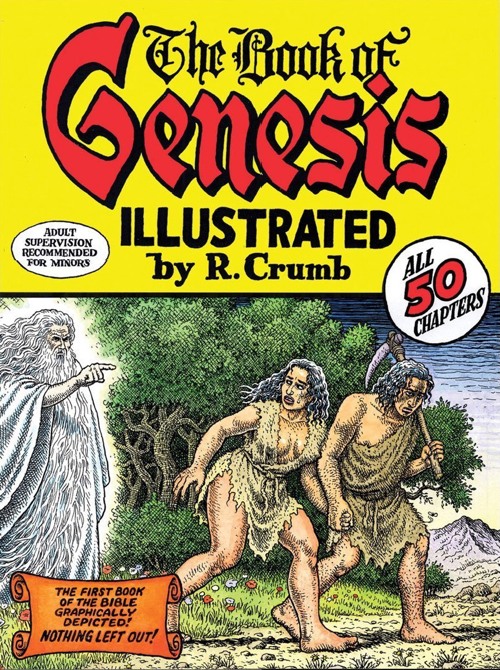
Genesis Chapter 9
Goodness. Sex, drugs, slavery, death, this chapter has it all!
Okay, so god gives Noah and his sons permission to leave the ark, and commands them to repopulate the earth. It would have gone faster if they'd had more than one wife each, no?
He then tells them all the animals are now going to be afraid of humans, and we get to be in charge of them. He also gives us permission to eat their flesh, though not their blood. Tom remarked last night that I am now going to be able to catch all kinds of references in everything I see and read, and here's an example right here: in The Merchant of Venice Shylock's bloodthirsty persecution of Antonio ends when the wise Portia, disguised as a judge, points out that his contract says he can have a pound of flesh, but not a pound of blood. Slightly less entertaining, this is the verse (4) that causes Jehovah's Witnesses to refuse blood transfusions but flesh with the life thereof, which is the blood thereof, shall ye not eat.
God also alls for blood sacrifices of men and animals in verse 5, but Jerry glosses over that because he's too excited about verse 6, which says the punishment for murder is death. Never mind that in chapter 4, verse 15, this selfsame god puts a mark upon Cain to let other people know they shouldn't hurt him, Jerry only has room in his head to interpret one verse, and he's chosen the one that suits his belief system.
God then gives humans the right of self-government. He promises not to flood the earth again and as a token of his regret, he gives us, get ready for it, rainbows. Thanks. He promises that any time it rains, there will be a rainbow to remind everyone he has promised not to flood us out.
So Noah takes up the profession of animal husbandry and also plants a vineyard. He promptly drinks the wine and passes out naked in his tent. Now, Jerry is very eager here to point out that Noah's drunkeness is a mistake, because of the changes to the earth wrought by the flood, the event so significant in his own brand of religious craziness that this is the only mention of said changes, and also because in ch. 6, he's the only righteous man left on earth.
One of his sons, Ham wanders past and sees the scene, then tells his brothers. And it's right here that I decide I need to buy the uncensored bible, because according to Jerry, this is completely innocent, but according to them, Ham rapes his dad. I'd really like to find out the mindset of the people who came up with this scene. Also, it explains the next part a lot better.
Ham's brothers, Shem and Japeth, are so scandalised by this that they can't even look their father in the genitalia, they took a garment and lait it upon both their shoulders and went backwards and covered the nakedness of their father (v. 23). When the old man wakes up he remembers what happened. Which is, at least in Jerry's telling, that he saw his dad naked and told his brothers. But the Old Testament is never one for letting the punishment suit the crime. So Noah, rather than punishing his son the gossip, punishes Canaan, his grandson.
His sentence is to be Shem and Japeth's servant, which many have interpreted as slave. Now, if Jerry had been writing this in the 1960s, when he opposed Brown vs. Board of Ed and Martin Luther King Jr., he'd have told you the Canaanites were black, but now he's a great pains to tell you they were white. Actually, they probably looked like everyone else who lives in the Middle East. He also wants us to know the Canaanites practised ritual prostitution, homosexuality, and orgiastic rites before they were conquered by the Israelites and the Japethic Romans, who just so happen to be the authors of this book, so maybe all of that isn't true.
Finally we find out Noah died at 950.
Genesis Chapters 6-8
Given this is the whole flood story, it made sense to put it into one note, no?
Chapter 6
Women cannot catch a break in this book. So here people are starting to multiply, and some of that multiplication is naturally of the female persuasion. The sons of God (v.2), who, according to Jerry, are decidedly not angels, but the descendants of Seth, intermarry with the daughters of men. Somehow this displeases god, so he limits the human lifespan to 120 years. The resulting children have evil imaginations, so god decides humans weren't such a good idea after all, and to kill us all, along with the animals in a giant flood. Kind of like a 6 year old who loses at Monopoly and throws the board in the air, this particular god. Of course, Jerry is at great pains to point out this is not god admitting he made a mistake, his resetting the game from zero is a 'change of direction.'
There is one spark of hope: Noah has somehow stayed good through all of this, so god saves him and his family, and tells them to build an ark. He gives him very detailed instructions about its dimensions and then tells him to gather two of each kind of animal together, plus food for all of them, and he does.
Chapter 7
God gives Noah further instructions about the ark, telling im to take 14 of each of the 'clean' animals (according to the dietary rules set down in Leviticus, apparently) and 2 of each of the 'unclean' animals (v. 2). I don't see why the animals have to die in all of this, considering god started all this because of the evilness of the human imagination. Also, he wants to destroy every living creature, but in chapter 1, he creates whales and fishes, which probably like it better when there's more water, no?
Anyway, like an evil mastermind explaining his dastardly plan, he tells Noah he's going to make it rain for 40 days and 40 nights and destroy everything (v. 4).
So Noah takes everything in with him and the world starts filling up until the ark starts to float. The rain keeps going until it's 15 cubits (22.5 feet) above the highest mountain and everything drowns, except presumably the whales and fishes, who don't notice a thing, though the only survivors mentioned are Noah and his crew. The water stays for 150 days.
Chapter 8
Finally, the waters recede and the ark comes to rest somewhere in the mountains of Ararat (v. 4). Noah first sends out a raven to see if the water has retreated, but it hasn't. Next he sends out a dove, which also fails to find dry land. A week later, it goes out and this time, it comes back with an olive branch, which doesn't make any sense if god has killed every living thing, and which Jerry ignores.
Just to be safe Noah waits another week and takes the cover off the ark, and discovers the land is dry. God tells him to leave and take all the animals with him. He commands them all to be fruitful and multiply, though there doesn't seem to be anything for them to eat except each other, which would seem problematic. Again, Jerry has nothing to say.
Next on Noah's priority list is to build an alter and sacrifice all the 'clean' beasts, which would decimate their populations, no? But anyway, god likes this and promises not to destroy the planet anymore, because man's heart is evil from the get-go. So he caused a flood and killed everything because he saw man was evil, then promises not to do it again because man is evil?
I'm quite surprised at Jerry's lack of footnotes here. What I've read about young Earth creationists suggests that this singular episode is the defining geological moment for our planet: it is responsible for everything from the current absence of dinosaurs to the Grand Canyon. Considering how eager he was in chapter one to point out that the words leave no ambiguity as to the possibility of evolution, he has nary a word to say here about the significance of this event.
Subscribe to:
Posts (Atom)